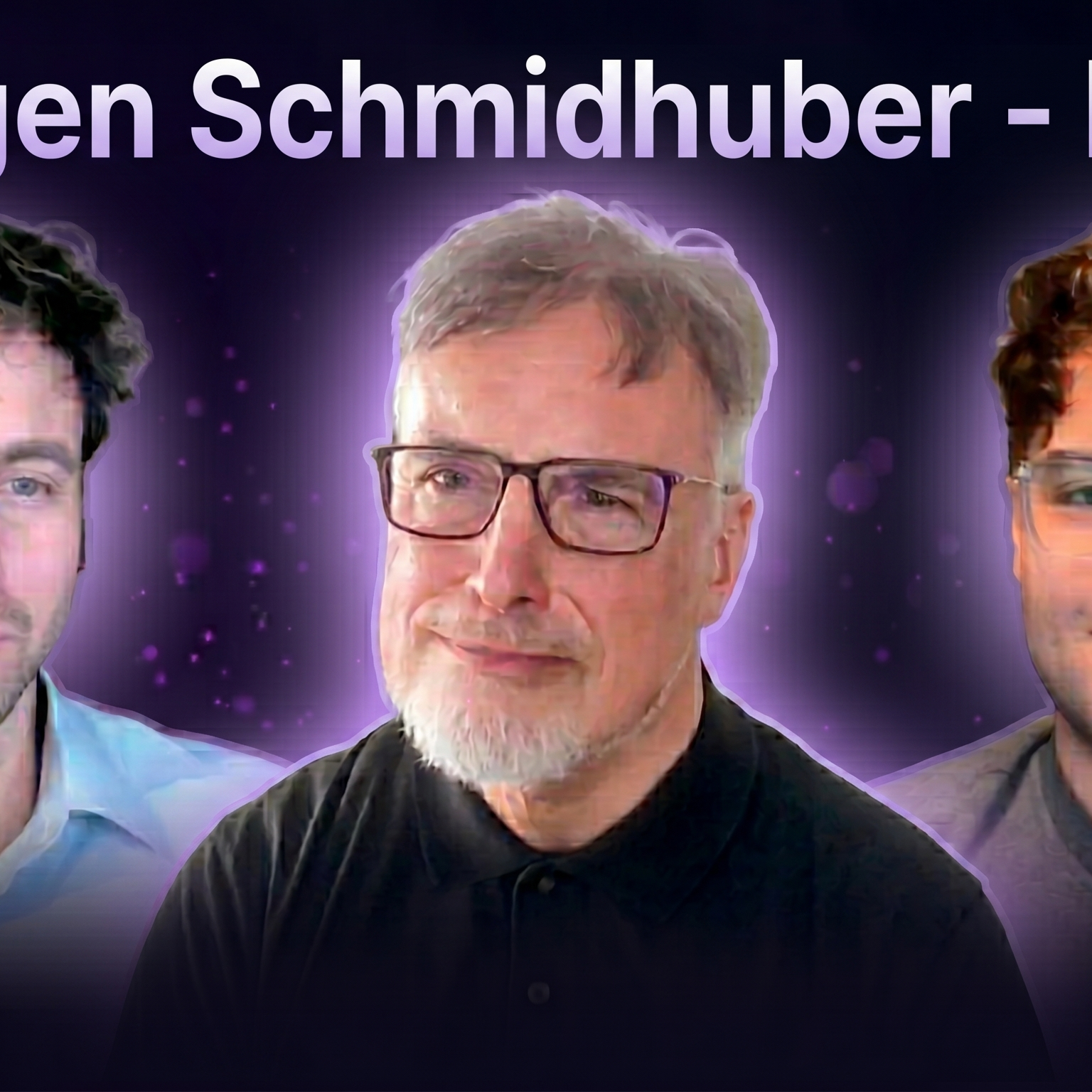

In this episode, we talked with Dimitris Papailiopoulos, researcher at Microsoft Research's AI Frontiers lab and professor at the University of Wisconsin, about doing research in the age of agents. Dimitris told us about the Sunday morning that changed how he works: he handed Claude Code and Codex a question he'd been sitting on for years, went about his day, and came back to an answer. After a few days of dread about what's left for humans, he landed somewhere more optimistic, calling this the golden age of asking questions.
We talked about his "smallest transformer that can add" leaderboard, a symbolic GSM8K solver built from if-else statements, and what happened when he put two Claude Code instances in the same file system and told them to do something cool (one pair invented a communication protocol, the other played Battleship). We also got into diversity and slop in agent-generated ideas, why agents get stubborn after a million tokens, harness overfitting on Terminal-Bench, continual learning and world models, whether agents need vision, and where information theory actually helps in AI and where it's a katana used to make coffee.
Timeline
00:00 Intro
01:45 How agents changed the way Dimitris does research
04:30 A Sunday morning with Claude Code, Codex, and GSM8K
07:15 The dread, then the golden age of asking questions
08:20 Taste and verification, and how we train students now
09:53 Will models make human verification obsolete?
11:30 The smallest transformer that can add 10-digit numbers
13:40 Humans as initializers for gradient descent in idea space
15:32 Allen on diversity, slop profiles, and high temperature research
21:44 When Claudes meet: Battleship, invented protocols, and a grokking paper
25:53 Single agent vs multi-agent under fixed compute
30:28 Auto-research benchmarks and what agents actually accelerate
35:14 Inside the symbolic GSM8K solver (with a live progress check)
40:04 Idea overfitting and why agents refuse to change course
44:00 Learning from failure traces and harness overfitting
48:04 Continual learning, memory files, and world models
51:30 Why don't labs personalize models on your own history?
57:52 Agent-to-agent communication: is Jira the right tool?
1:01:25 Multimodality: vision as a tool vs one unified model
1:05:40 Information theory and AI, or making coffee with a katana
1:11:23 Closing thoughts: ask bigger questions
Music:
"Kid Kodi" - Blue Dot Sessions - via Free Music Archive - CC BY-NC 4.0.
About: The Information Bottleneck is hosted by Ravid Shwartz-Ziv and Allen Roush, featuring in-depth conversations with leading AI researchers about the ideas shaping the future of machine learning.